

DHL Case Study: How Linerless Technology Reduced Label Waste by 60%
DHL Case: How Linerless Reduced Labeling Waste by 60%
By Etiden AIDC | Reading time: 4 min
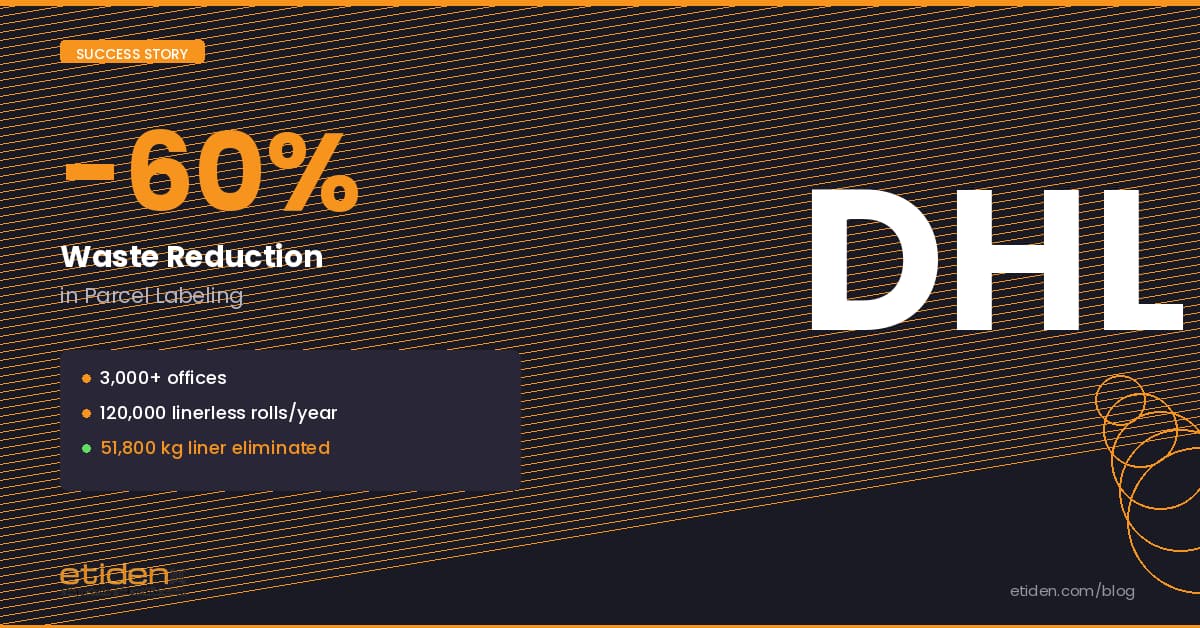
When we talk about linerless, data speaks louder than promises. One of the most documented cases is DHL, the German logistics multinational, which implemented linerless technology at its plant in Nohra (Germany) and achieved a 60% reduction in labeling waste.
The context
DHL handles millions of packages daily. Each package requires at least one shipping label, often more. In a plant like Nohra, the volume of discarded liner represented a considerable waste stream that had to be managed, transported, and processed.
The siliconized liner of conventional labels is not easily recyclable. It accumulates, takes up space, generates management costs, and contributes to the environmental footprint of the operation.
The implementation
DHL introduced linerless technology into its automatic labeling systems. The key was to integrate the linerless system into existing processes without interrupting daily operations.
Linerless printers cut the label to the exact required length, completely eliminating the liner. In a high-volume logistics environment, this represented a significant operational transformation.
The results
The main figure is clear: a 60% reduction in labeling waste. But the benefits went beyond environmental impact. Operators no longer had to deal with liner: no more collection, no more specific waste containers, no more liner issues on the floor. The labeling process was simplified, and operational efficiency improved.
What this means for your company
You don’t need to be DHL to benefit from linerless. The same principles apply to any operation that generates labels: a distribution warehouse, a restaurant chain, a supermarket, or a manufacturing line.
The key is volume. The more labels you print, the greater the impact of linerless in three dimensions: waste reduction, cost savings, and operational efficiency.
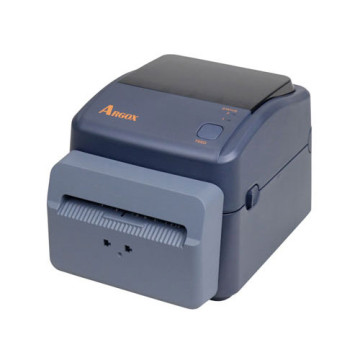
With the ARGOX D4-280 Linerless kit from SATO at €425, any company can test the technology without a large investment. ROI is achieved in 3–6 months in most scenarios, and operational benefits are noticeable from day one.